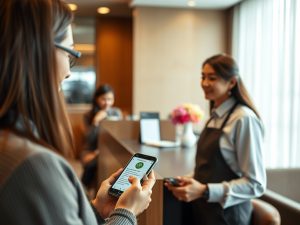
Hotels can personalize service without slowing operations by standardizing the decision points behind personalization. The property should capture a small number of useful preferences, route them to the right team at the right moment, and give staff bounded options for acting on them instead of creating a custom workflow for every guest.
Service Personalization Without the Bottleneck
- Personalize recurring moments such as arrival, room setup, communication, dining, and recovery rather than every interaction.
- Convert common preferences into selectable operating standards and service codes.
- Give frontline teams clear authority limits so useful decisions do not require repeated approvals.
- Measure personalization by reduced friction and consistency, not by the number of special touches delivered.
Standardize the choices behind personalized service
The apparent tension between personalization and efficiency usually comes from treating every request as unique. Many guest preferences can be grouped into repeatable choices: room location, housekeeping timing, pillow type, communication channel, arrival support, dining constraints, workspace needs, or a preference for less interaction. When these are represented consistently in the reservation, CRM, or property-management workflow, staff can respond quickly without reading long free-text notes.
A useful operating standard defines what can be promised, who owns the task, when it must be completed, and what happens if the preferred option is unavailable. This keeps personalization from turning into an uncontrolled list of exceptions. It also makes training easier because staff learn a small set of response patterns that still feel tailored to the guest.
Put preference information where the work happens
Preference data has little value if it is trapped in a profile that housekeeping, front desk, food and beverage, or guest services cannot see at the right time. A room-setup preference should appear in the room-preparation workflow. A late-arrival note should reach the front desk before the guest arrives. A dietary restriction tied to an event should reach the relevant food-service team with enough time to confirm what can actually be provided.
Research on hotel operations and service innovation has long examined the operational side of personalized hospitality: insight matters only when it can be translated into a workable process. That operational discipline also complements data-led guest journey personalization, where the system should expose only the information required for the service moment rather than flooding staff with an entire guest history.
Use staff judgment inside clear guardrails
Automation can handle routine preference matching, but service recovery and emotionally important moments often benefit from human judgment. The answer is not unlimited discretion. Hotels can define a menu of approved recovery actions, service gestures, room-move options, or amenity substitutions, with clear thresholds for escalation. Staff then have enough authority to resolve common situations immediately while managers remain involved in high-cost, safety-related, legal, or unusual requests.
McKinsey’s work on exceptional hotel customer experience highlights the importance of equipping staff with customer preference information and empowering them to act. The operating lesson is to make that empowerment concrete. A personalized response should be fast because the employee already knows the available choices, not because the employee is expected to improvise every time.

A personalization matrix helps teams distinguish high-value, low-friction actions from requests that require advance coordination. It also prevents the hotel from assuming that every guest segment wants more service.
Service Personalization and Operational Impact Matrix
| Traveler type | High-value service cue | Efficient delivery method | Escalate when |
|---|---|---|---|
| Business | Arrival timing, workspace, quiet-room preference | Profile code plus pre-arrival task | Disruption affects meeting or departure |
| Family | Room setup, meal timing, child-related logistics | Pre-arrival selections and task bundle | Safety, capacity, or room-type issue arises |
| Couple | Privacy, celebration preference, service intensity | Optional occasion/service preference | Request is costly, unavailable, or sensitive |
| Solo leisure | Communication choice, local guidance, support visibility | Digital options with easy human handoff | Guest reports safety or access concern |
Design the workflow around capacity and timing
Hotels should also define how many personalized tasks can be handled during peak periods. A request that is easy at 2 p.m. on a quiet Tuesday may create a queue when dozens of rooms turn over at once. Capacity planning can classify tasks by lead time, team, and cutoff. Pre-arrival room setups may need a confirmation deadline; dining requests may need to move to the restaurant system; room-location preferences may remain subject to inventory. Clear timing rules protect both guest expectations and employee workload. They also make it easier to communicate when a preference is a request rather than a guarantee, which is more trustworthy than allowing the system to imply certainty that operations cannot support.
Create service codes that remain understandable to people
Standardization should not produce cryptic profiles that only one department can interpret. Preference codes, task labels, and exception notes need plain definitions, examples, and ownership. If a room-location code means “away from elevator if available,” every team using it should understand that it is a preference rather than a guarantee. If a housekeeping code means “service after noon,” the system should specify whether the request applies every day or only on arrival day. Free-text notes should be reserved for details that cannot be represented safely and accurately in structured fields. Periodic audits can remove duplicate codes, outdated abbreviations, and notes that no longer have a clear purpose. This makes the workflow faster for new employees and reduces the chance that personalization depends on informal knowledge held by a few experienced staff members.
Track exceptions, overrides, and repeat contacts
A personalization program should create less work over time. If staff repeatedly override the same recommendation, if guests contact the hotel twice for the same request, or if a preference routinely cannot be fulfilled, the workflow needs correction. Useful measures include first-contact resolution, task completion before arrival, number of manual handoffs, service recovery time, preference opt-outs, and the frequency of notes that require interpretation.
Operational teams can connect these findings with traveler-segment hotel marketing so marketing does not promise a level of customization the property cannot deliver. They can also use guest-segment concept planning to decide which service capabilities belong in the core operating model. Personalization is sustainable when it becomes a repeatable way of working, not a layer of extra favors placed on top of an already busy shift.
Make Personalization Easier to Deliver Each Time
The best operating model reduces the amount of improvisation needed to make a stay feel personal. Capture a few preferences that genuinely change service, translate them into clear tasks, route them to the team doing the work, and give staff bounded authority to resolve common situations. Then review exceptions and repeat contacts to improve the process. When the system gets simpler for employees, personalization is more likely to become consistent for guests. A quarterly review of the code set, task completion data, and staff feedback can keep the workflow lean as guest expectations and staffing patterns change.