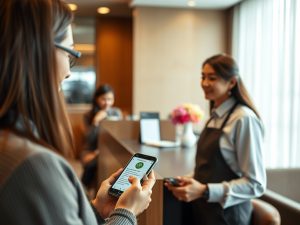
Future hotel models will be more credible when they are built around distinct trip missions rather than a single idea of the “future traveler.” A family using a hybrid resort, a solo guest booking an AI-assisted micro-stay, a couple choosing a wellness-led property, and a business traveler extending a work trip can all value technology and flexibility, but for different reasons.
Future-Stay Snapshot
- Segment future-stay concepts by trip mission, desired control, service intensity, and tolerance for automation.
- Use technology to remove friction first; novelty should be secondary.
- Keep human support visible when a request is emotional, complex, high value, or difficult to reverse.
- Pilot new concepts with measurable guest tasks before committing to a property-wide operating model.
Separate durable needs from fashionable features
A future-stay concept should begin with a problem that remains meaningful even if a specific technology changes. Families still need coordination, predictable space, and fewer points of friction. Business guests still care about time, reliability, privacy, and the ability to work. Couples may prioritize shared experiences and control over how much service they receive. Solo travelers may value confidence, flexibility, and simple access to help. The technology layer can evolve while those underlying needs remain relatively stable.
That distinction matters because emerging hospitality ideas can be easy to over-specify. A robot, app, digital key, virtual concierge, or AI itinerary tool can be useful, but only when it improves a guest task. The 2026 travel outlook from Deloitte notes growing use of generative AI in travel shopping and points to the possibility of more personalized, automated planning. For hotel concepts, the practical question is which part of the stay should become more automated and which part should remain deliberately human.
Design different levels of control for different segments
Future-stay personalization is partly about control. A frequent business traveler may prefer a “remember my routine” model that defaults to a familiar room zone, late arrival process, workspace setup, and express departure. A family may want a planning dashboard that groups room configuration, meal timing, children’s activities, and transport in one place. A couple may prefer optional curated experiences without constant prompts. A solo traveler may value flexible cancellation, clear neighborhood guidance, and an easy path to human assistance.
These preferences should not be inferred too aggressively. A stronger model lets guests choose how much automation and recommendation they want. The hotel can make a few useful defaults, expose the logic in plain language, and allow easy changes. That approach also connects with personalizing the guest journey with hotel data, where the quality of the experience depends as much on consent and data discipline as on the sophistication of the recommendation engine.
Prototype the stay as a service sequence
Instead of asking what a “hotel of the future” should contain, map the sequence of discovery, booking, arrival, room use, amenity use, service recovery, and departure. Then identify where different segments lose time or confidence. A family may struggle with room readiness and coordination. A business traveler may lose time at check-in or searching for a quiet place to work. A leisure couple may miss bookable experiences because availability is scattered. A solo guest may want clearer safety and transport information before arrival.
Deloitte’s future hospitality report discusses AI-supported itinerary building, onsite prompts, and more connected guest interactions. Those ideas are most useful when they are treated as components of a service sequence, not isolated technology purchases. A future-stay pilot should therefore define the guest task, the handoff to staff, the fallback when automation fails, and the metric that shows whether the change actually reduced friction.
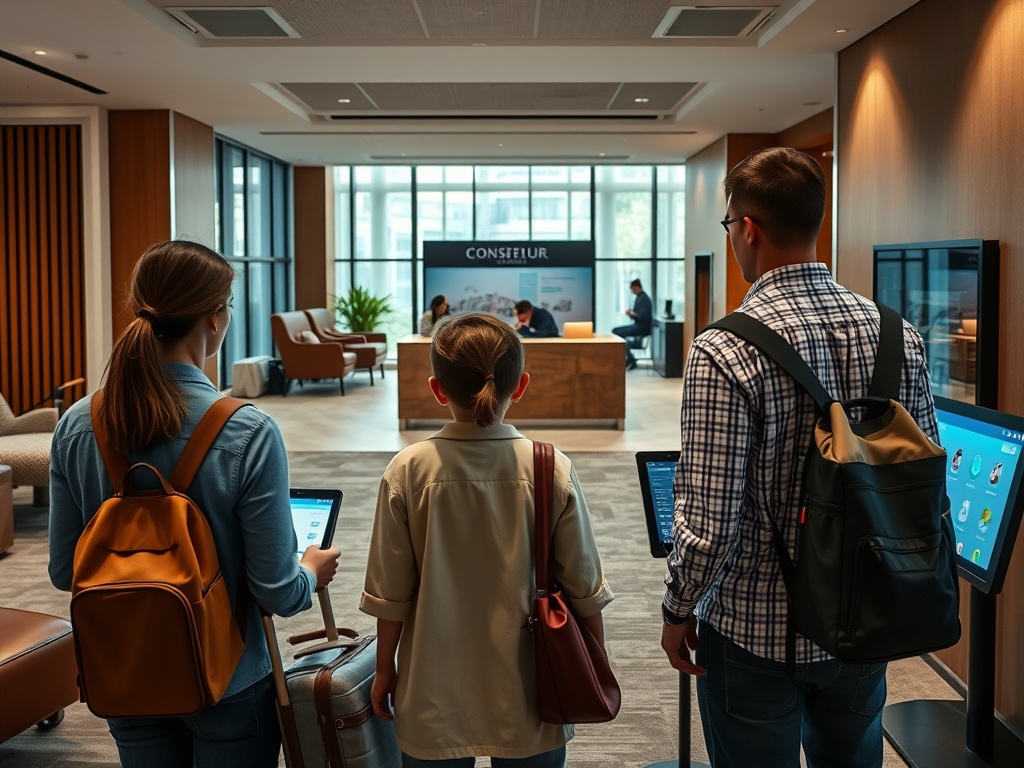
A simple matrix helps concept teams avoid designing one futuristic experience and assuming it will satisfy every traveler. The same capability can be delivered differently depending on the segment and context.
Future-Stay Personalization Matrix
| Traveler type | Future-stay priority | Useful capability | Human fallback |
|---|---|---|---|
| Business | Speed and predictability | Preference defaults; express arrival/departure | Immediate staff help for disruptions |
| Family | Coordination and shared planning | Unified itinerary; room and activity planning | Family-focused service contact |
| Couple | Choice and experience curation | Optional recommendations; flexible service level | Concierge for complex plans |
| Solo leisure | Confidence and autonomy | Clear digital guidance; flexible support | Visible 24/7 escalation path |
Plan for failure modes before introducing new technology
Future-stay concepts also need a graceful fallback. Batteries fail, mobile keys do not always load, recommendation engines can be wrong, integrations can lose data, and a guest may simply prefer not to use an app. A pilot should therefore define an equivalent non-digital path and make it easy to find. Staff training should cover the failure mode, not only the ideal demo. The concept is stronger when a guest can move from automation to human help without restarting the entire process or repeating every detail. Resilience is part of personalization because different traveler segments have different tolerance for uncertainty, especially when they are tired, traveling with children, or trying to reach a time-sensitive commitment.
Set boundaries for proactive recommendations
A future-stay system should also know when not to recommend anything. Guests can become fatigued when every location, meal period, or open time slot triggers a prompt. Hotels can create rules that limit frequency, exclude sensitive contexts, and favor moments where the recommendation has clear utility. A traveler who has already declined spa suggestions should not keep seeing the same offer. A family arriving late may need room-readiness information more than an activity upsell. A business traveler whose flight is delayed may need an updated arrival path rather than dining inspiration. These boundaries can be tested alongside conversion metrics by tracking dismissals, opt-outs, repeated service contacts, and complaints about relevance. The aim is not maximum interaction. It is appropriate assistance at moments when the guest is likely to benefit. Restraint can be a form of personalization when it respects attention and makes the remaining recommendations more credible.
Pilot narrowly before scaling the model
Future concepts should be tested in contained ways: a floor, room type, arrival window, loyalty cohort, resort activity, or pre-arrival journey. That keeps operational risk manageable and makes feedback easier to interpret. Useful pilot measures include task completion, service contacts, opt-out behavior, setup time, staff overrides, guest confusion, and whether the feature changes the intended behavior. Revenue can matter, but it should not be the only signal.
Concept teams can compare pilots with eco-stay priorities by traveler type when sustainability is part of the future model, and with hotel concepts shaped by market demand before expanding capital-intensive ideas. The strongest future-stay model is usually not the one with the most visible technology. It is the one that gives each traveler type appropriate control while keeping the service dependable when conditions change.
Build the Future Around Real Guest Jobs
A future-stay model becomes practical when each new feature is tied to a recurring guest job and a clear operating response. Segment planning helps reveal where automation, flexibility, human attention, and physical space should differ. Start with one journey, one traveler mission, and one measurable friction point; then expand only after the property understands who benefited, who opted out, and what staff had to do behind the scenes. That discipline keeps innovation guest-centered instead of technology-centered.