The most effective mirror for a small room is usually a large, simple mirror placed where it can reflect useful light or extend a clear sightline. Full-length wall mirrors, oversized leaners, wide horizontal mirrors, and mirrored cabinet fronts can all work, but placement and proportion matter more than an ornate frame or a “space-enhancing” marketing claim.
TL;DR: Use one substantial mirror where it reflects a window, doorway, open wall, or visually calm area. Full-length mirrors suit narrow bedrooms and entryways, wide horizontal mirrors help short walls feel broader, and mirrored storage can add function without using more floor space. Avoid reflecting clutter, harsh glare, or another cramped corner.
Why mirrors can change the perception of space
A mirror does not increase square footage, but it can extend visual depth, redirect light, and reduce the feeling of a hard visual stop. The effect is strongest when the reflection contains something spacious or bright: a window, a doorway into another room, a long sightline, or a cleanly styled section of the room.
The National Glass Association notes in its technical material that a well-placed mirror can bring light into a living space and create a feeling of enlargement. Its mirror installation guidance also emphasizes proper handling and installation to protect the reflective coating and reduce premature damage.
That distinction matters. The design benefit comes from reflection and placement; the mirror still needs suitable hardware, backing, and environmental conditions.
Mirror types that work well in compact rooms
| Mirror type | Best use | Why it helps | Main caution |
|---|---|---|---|
| Full-length wall mirror | Narrow bedrooms, entryways, dressing zones | Creates vertical depth and reflects more of the room | Requires secure mounting and enough clear wall area |
| Oversized leaning mirror | Bedrooms and living rooms | Large reflective area with minimal visual fragmentation | Must be stabilized; not ideal where children or pets can tip it |
| Wide horizontal mirror | Short walls, dining nooks, above consoles | Visually widens the wall and can bounce window light | Can feel heavy if frame is oversized |
| Round or arched mirror | Small entry, powder room, compact living space | Softens boxy architecture and adds a focal point | Smaller reflective area than a full-wall option |
| Mirrored cabinet/front | Tiny storage areas, wardrobes, medicine cabinets | Combines storage with reflection | Fingerprints and glare are more visible |
| Mirror grouping | Decorative wall with limited single-panel options | Adds rhythm and reflection | Multiple frames can create visual noise in a busy room |
There is no universally “best” shape. Match the mirror to the wall proportions and the scene it will reflect.
Wide mirrors for short walls and dining areas
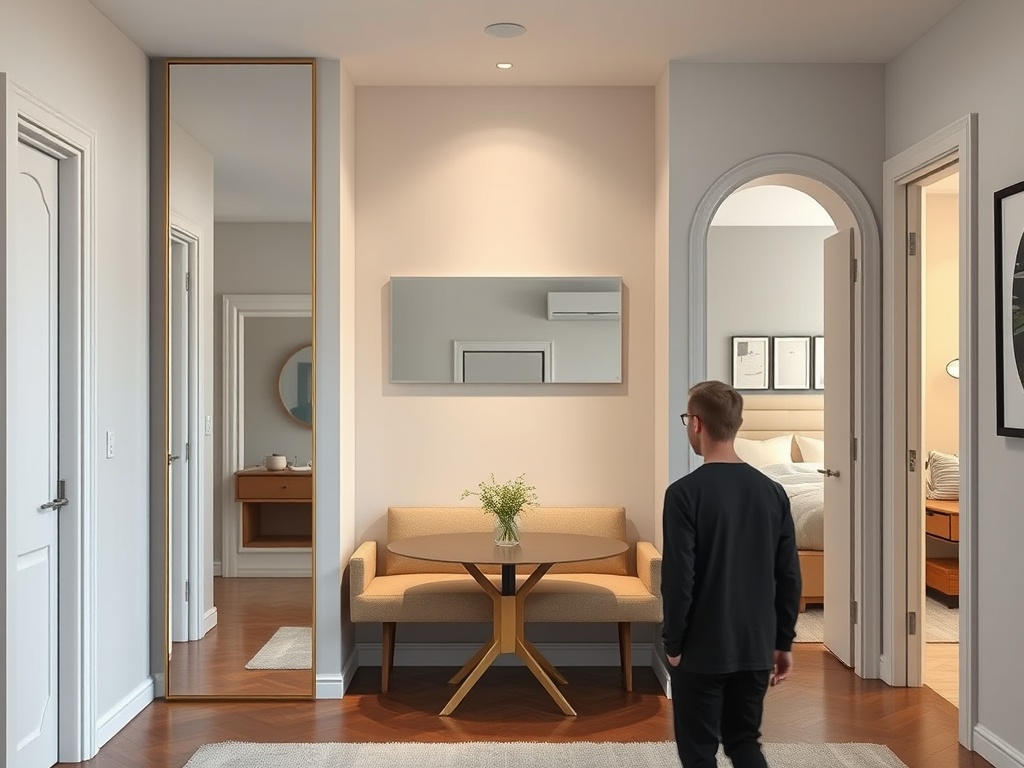
A wide horizontal mirror can make a short wall feel more expansive, especially when it sits across from a window or an open part of the room. Above a low console or banquette, it can create a strong horizontal line without consuming floor area.
Keep the reflection in mind before drilling. Stand where the mirror will hang and use a phone camera or temporary paper template to estimate what it will show. A mirror that reflects a blank light wall may make the room feel calmer; one that doubles a pile of cables, open shelving, or a crowded countertop may amplify clutter instead.
Oversized mirrors: high impact with fewer visual breaks
One large mirror can be more effective than several small mirrors because it creates a broader uninterrupted reflection. This is especially useful in a compact living room where too many frames would compete with art, shelving, and furniture.
Recent small-space advice from Architectural Digest includes mirrors as tools for amplifying light and perceived depth, while also stressing edited furniture layouts and fewer visual interruptions. That is editorial design advice rather than a building standard, but it supports a useful principle: the mirror works best as part of the whole room composition.
An oversized mirror is also heavier and more demanding to install. Check the wall type, mirror weight, hanger rating, and manufacturer instructions. Large glass should not be mounted with improvised hardware.
Where to place a mirror for the strongest effect
Good locations share one trait: they reflect something worth repeating. Useful targets include:
- A window with diffuse daylight, placed at an angle that avoids direct glare.
- A doorway or opening that extends the sightline into another space.
- A light-colored or textural wall that adds brightness without clutter.
- A plant grouping or art wall that benefits from a second view.
- A long corridor or room axis where the reflection increases perceived depth.
Avoid positioning a mirror solely because a wall is empty. Check what a seated person, a standing person, and someone entering the room will actually see.
Frame width and edge detail change the visual weight
A frameless or thin-frame mirror tends to disappear into the architecture, which can suit minimalist rooms and very tight spaces. A thick wood, metal, or carved frame behaves more like wall art. It can add character, but it also occupies visual space.
For a small room, the most reliable approach is to choose either a strong mirror shape or a strong frame, not necessarily both. If the room already has patterned textiles, open shelving, and multiple art pieces, a quieter frame prevents the mirror from becoming another competing object.
Cleaning and maintenance are part of the choice
Large mirrors show dust, fingerprints, splash marks, and streaks. In dining areas and entryways, that may be manageable with routine glass cleaning. In bathrooms or humid zones, edge protection and correct installation become more important because moisture can affect some mirror backings over time.
The National Glass Association’s technical guidance warns that mirror backing can be vulnerable to chemicals and excessive moisture. Follow the mirror manufacturer’s cleaning instructions rather than spraying harsh cleaners directly around exposed edges.
Floor cleaning also affects mirror practicality. A mirror that reaches nearly to the floor may collect splashes and dust from vacuuming or mopping. If you are planning a whole-room refresh, choosing the right vacuum type for your floor plan can help maintain those low, reflective surfaces with less bumping and overspray.
For a dining corner, coordinate reflection with space-saving breakfast-nook furniture. For the room’s broader visual balance, compare minimalist and maximalist small-space strategies before adding more wall detail.
A simple shortlist by room and budget
- Small bedroom: full-length wall-mounted mirror with a slim frame.
- Narrow entry: tall rectangular or arched mirror above a shallow console.
- Compact living room: one oversized wall mirror opposite or adjacent to useful natural light.
- Tiny dining nook: wide horizontal mirror above a bench or side wall, provided it does not create glare.
- Storage-starved room: mirrored wardrobe or cabinet front to combine reflection and function.
- Lower-budget update: large secondhand mirror with sound glass and secure hardware; repaint or simplify the frame if needed.
Reflect the room you want to emphasize
The biggest mirror is not automatically the best mirror. Choose the wall by its reflection, then choose a mirror large enough to have an effect without overwhelming the furniture below it. In a small room, one carefully placed reflective surface usually looks more intentional than several mirrors used only to fill empty wall space.
Interior design and installation information is provided for general educational purposes. Heavy glass, wall anchors, electrical wiring behind walls, and moisture-prone locations can create safety or installation risks. Follow manufacturer instructions and use qualified installers when needed.
Before buying, tape the proposed mirror outline on the wall and photograph the reflection from several positions. That simple test often reveals whether the mirror will expand the room visually or just duplicate clutter.